Clean your outdoor AC unit
The One-Hour Chore That Can Cut Your Cooling Bill Up to 30%
Short answer: Once a year ideally in spring before it gets hot outside, shut off the power and give your outdoor unit a gentle cleaning clear the debris, brush and rinse the coil fins with a regular garden hose, and keep two feet of clearance around it. A caked outdoor coil can't dump heat, and that alone can rob you of up to 30% of your efficiency. This is one of the highest-payoff jobs a homeowner can do, and it costs you nothing but an hour.
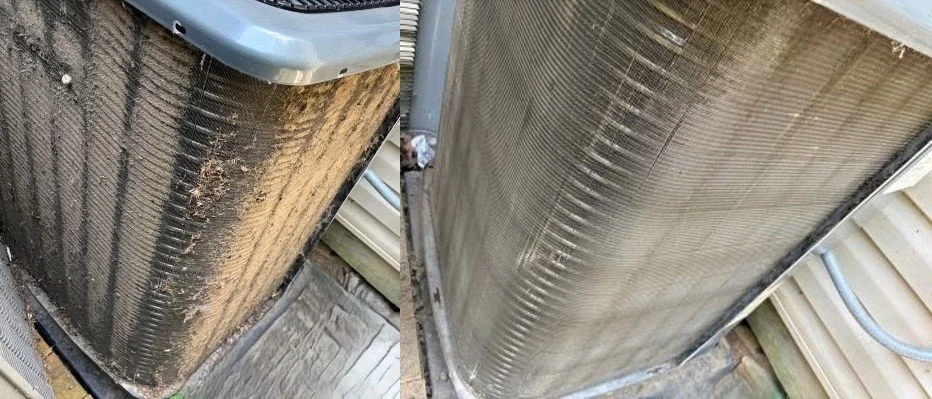
A dirty outdoor coil on the left. The right side has been cleaned.
Why the outdoor coil matters so much
Here's what that outdoor unit actually does: it takes the heat your AC pulled out of your house and dumps it into the outside air. The coil — those thin metal fins wrapped around the unit — is where that hand-off happens. When it's caked with grass clippings, cottonwood fuzz, pollen, and dust, it's like trying to cool a car engine with a blanket over the radiator. The heat has nowhere to go, so the system runs longer and harder, your bill climbs, and the extra strain wears the compressor out early.
The numbers back it up, a dirty condenser coil can cut your system's efficiency by up to 30%. That's the whole reason this cheap chore is worth an hour of your Saturday.
What you'll need
• A screwdriver or nut driver (to lift the top grille, if yours needs it).
• A garden hose with a regular spray nozzle not a pressure washer.
• A soft brush or a shop vac with a brush attachment.
• A can of no-rinse foaming coil cleaner (optional, for stubborn grime).
• A fin comb, if any fins are bent.
How to do it step by step
Power off first — no exceptions. Shut the unit off at the thermostat, then kill power at the outdoor disconnect box (the small box on the wall near the unit) and at the breaker. There are live electrical parts and a fan in there. Never open or rinse this unit with the power on.
• Cut the power. Thermostat off, disconnect pulled, breaker off. Confirm the fan won't spin.
• Clear the big debris. Pick out the leaves, grass, and sticks around and inside the base by hand. Pull any weeds growing up against it.
• Brush the fins gently. Use a soft brush or a vacuum with a brush attachment to sweep loose dirt off the coil. Brush in the direction of the fins, up and down — never side to side, which bends them.
• Rinse from the inside out, if you can. If your unit's top lifts off easily, rinse the coil from the inside so you push the dirt back out the way it came. If not, rinsing from outside is fine. Use gentle water pressure and let it flow through the fins.
• Use coil cleaner for stubborn buildup. For a coil that's really packed, spray on a no-rinse foaming coil cleaner, give it the few minutes the can says, and rinse. Skip the harsh stuff no bleach, no ammonia; they eat the aluminum.
• Straighten bent fins. Bent-over fins block airflow. A cheap fin comb sets them back straight. Take your time they're delicate.
• Let it dry, then restore power. Give it a few minutes, put the grille back, restore the disconnect and breaker, and turn the system back on. It should run quieter and cool better.
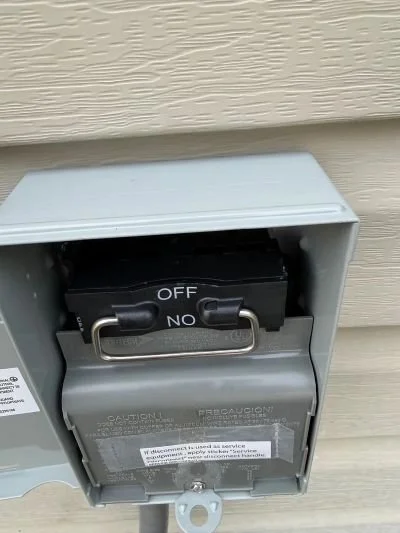
Common disconnect for an outdoor unit with the disconnect in the off position.
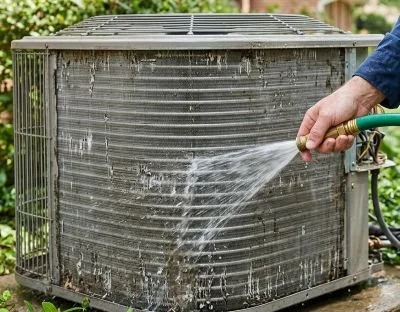
A person gentle rinsing an outdoor unit with a water hose.
The two things that ruin an outdoor unit
• A pressure washer. I know it's tempting, but the fins are thin aluminum a pressure washer flattens them shut, and once they're mashed down, airflow is worse than the dirt ever made it. Use a garden hose only.
• Harsh chemicals. Bleach and ammonia corrode the coil and the parts around it. Plain water handles most of it; a proper coil cleaner handles the rest.
• Pets. Do not let your pets urinate on your outdoor unit. If necessary, put up a fence.
Keep it clean between washes
• Two feet of clearance, all the way around. Trim back shrubs, tall grass, and anything crowding the unit. It needs open air to shed heat.
• Keep the lawn clippings aimed away. When you mow, point the chute away from the unit — grass is what mats these coils up fastest.
• Watch the cottonwood season. If you've got cottonwoods nearby, check the unit every couple of weeks while they're shedding. That fuzz clogs a coil in no time.
• Don't wrap it for winter. A common mistake a sealed cover traps moisture and invites critters. If anything, a breathable top cover only, and only over the fan. If it is a heat pump, never cover it.
When to call a pro
If the fins are badly crushed over a large area, if the coil is packed solid down deep where a hose won't reach, or if you notice oily residue on the coil (a sign of a refrigerant leak), bring in a pro. A full professional coil cleaning runs more than this DIY rinse, but it's still cheap next to a compressor that died from running hot all summer. And if you're ever unsure about the electrical side, there's no shame in leaving it to someone with the training. A clean coil isn't worth a shock.
One thing worth knowing as a customer, some maintenance contracts will clean them during a preventive maintenance and some will charge you a fee to clean. Look to your maintenance agreement to found out which you have.